Revolutionizing Home 3D Printing: The All-Metal Technique on Ender 3 Without Complex Tools
The world of 3D printing is vast and ever-evolving, where enthusiasts constantly push boundaries to achieve groundbreaking results. The latest innovation, which involves printing with metal using a friction wheel on the widely popular Ender 3 printer, is yet another milestone that could transform DIY manufacturing.
The Ender 3 is known as a reliable and budget-friendly 3D printer, favored by hobbyists and professionals alike. Traditionally, printing with metal has been confined to specialized equipment or high-end machines, often out of reach for average users. However, the creativity unleashed by utilizing a friction wheel opens new possibilities.
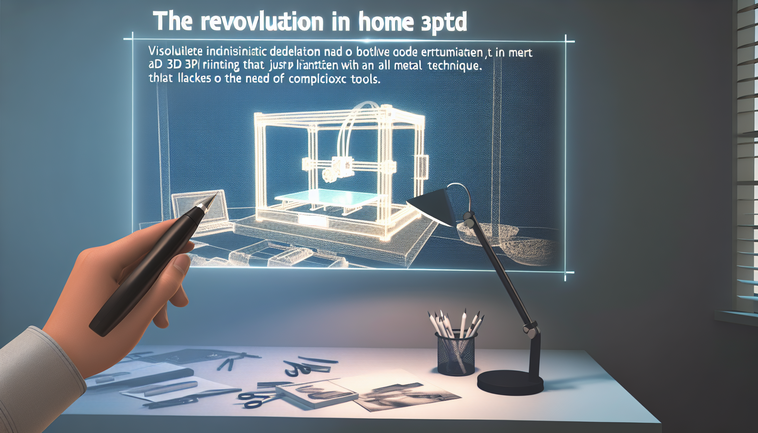
At the heart of this technique is the friction wheel mechanism, which simplifies the way metal is deposited. Typically, metal 3D printing requires precise control and sophisticated technology to handle its material properties. The friction wheel, however, advances by using friction to adhere the metal incrementally, eliminating the complexities associated with traditional metal printing methods.
One of the central benefits of this innovation is its accessibility. By transforming a common FDM printer like the Ender 3 into a metal printer, makers and creators can experiment with metal prototyping without investing in expensive machinery. This accessibility might democratize access to metal printing, much like the way the Ender 3 itself democratized 3D printing.
Additionally, this method’s simplicity could lead to broader applications. From crafting small metal components for electronics to creating decorative pieces, the friction wheel approach equips creators with the tools to actualize their metal design ideas without the need for outsourcing or large-scale industrial setups.
However, it’s essential to acknowledge the challenges that come with this approach. Printing with metal, even with a friction wheel, might require precise calibration and iterative experimentation to master the material’s unique properties. Furthermore, as with any nascent technology, reliability and consistency will be key areas for ongoing development and improvement.
In conclusion, the ingenuity behind printing metal on the Ender 3 using only a friction wheel demonstrates the potential for home-based innovation. As more makers explore this frontier, the intersection of creativity, accessibility, and technology promises to reshape how we think about manufacturing. It’s an exciting time for 3D printing, and this development invites inventors to push the limits of what’s possible, right from their desktops.