A Leap Forward in Robotic Surgery: SSM DePaul Hospital’s Bold Move
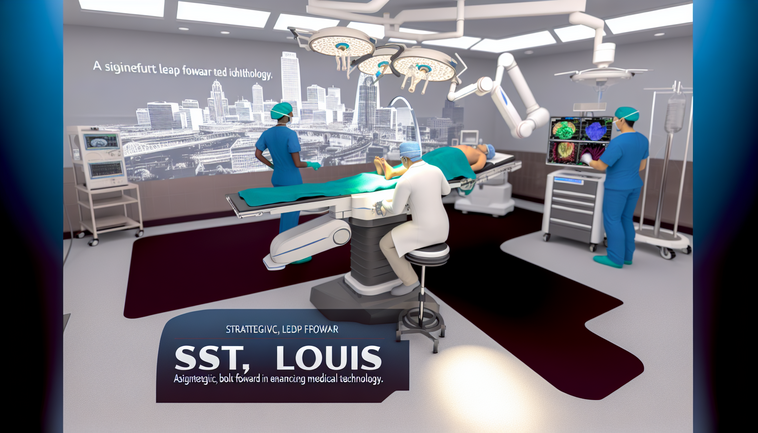
In an era where technology and healthcare continually converge, SSM DePaul Hospital – St. Louis is making headlines with its strategic move to enhance its surgical capabilities. The hospital has submitted a request for acquiring an additional Da Vinci Xi dual-console surgical robot, a sophisticated marvel underlining the future of surgery. However, this visionary step awaits the nod from the Missouri Health Facilities Review Committee under what is known as Certificate of Need approval, filed strategically as Application #6216 HS.
The Da Vinci Xi system represents the pinnacle of minimally invasive surgical technology, offering precision and control far beyond human capabilities alone. This dual-console setup is particularly noteworthy as it facilitates collaborative surgeries, allowing two surgeons to work in tandem. For a hospital like SSM DePaul, which already prides itself on cutting-edge medical practices, this acquisition could dramatically improve surgical outcomes and elevate patient care.
But what does this mean for the patients and healthcare professionals at SSM DePaul? For patients, the Da Vinci Xi promises reduced recovery times, minimized scars, and shorter hospital stays, incentivizing a potential shift in how surgeries are perceived. For surgeons, it is a chance to refine their techniques and push the boundaries of what’s possible in the operating room. The dual-console feature not only enhances surgical education by allowing real-time teaching but also provides an opportunity for precise and collaborative efforts during complex procedures.
However, the journey to acquire this technology isn’t purely a matter of financial investment; it requires strategic planning and approval by the Missouri Health Facilities Review Committee. The Certificate of Need approval process ensures that investments in new healthcare technologies align with community needs and existing healthcare resources. This is a crucial step in maintaining a balanced healthcare ecosystem within the state, avoiding unnecessary duplication of services which could drive up costs without proportional benefits.
From a broader perspective, SSM DePaul’s initiative could catalyze a shift in local healthcare strategies. If successful, we might see other institutions in the region follow suit, contributing to a regional ecosystem where advanced technology becomes the norm rather than the exception. Such advancements are not just about keeping pace with technological evolution; they are about setting the standard for holistic patient care in a rapidly changing medical landscape.
Of course, this move also poses more profound implications for medical training and professional development. With the advent of such sophisticated technology, the emphasis on surgical training will likely increase, leveraging these tools to produce more skilled surgeons adept in both traditional and robotic-assisted techniques. Ultimately, it could herald a reformed education system that better prepares future healthcare professionals for the challenges and opportunities of modern medicine.
In conclusion, SSM DePaul Hospital’s pursuit of an additional Da Vinci Xi surgical robot is a testament to its commitment to progressive healthcare. While the approval process is just one of the many steps in this journey, it signifies SSM’s dedication to enhancing patient outcomes through technology. As the healthcare landscape in St. Louis and beyond continues to evolve, such investments in innovation could well pave the path towards a future where healthcare is not only about treatment but transformation.